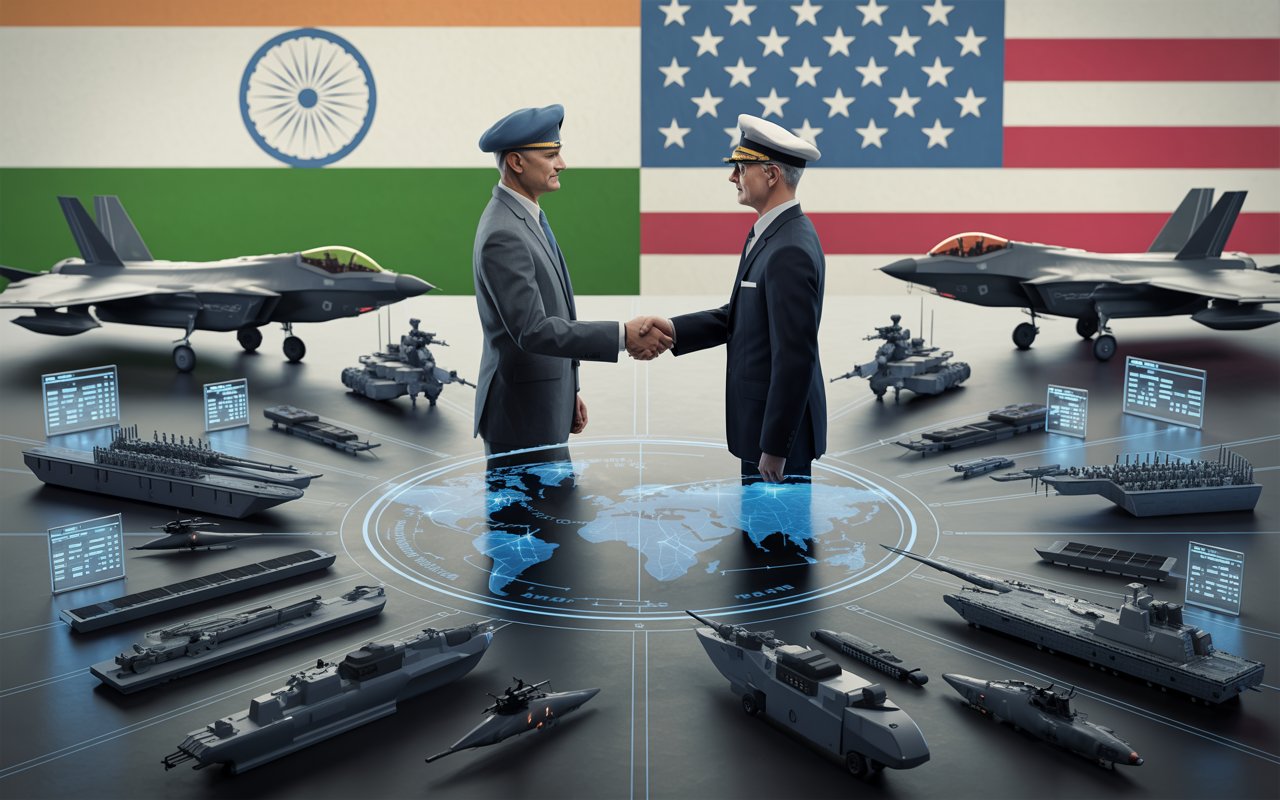
US-India Defense Deals Focus on Sustainability Over Expansion
The latest US-India defense deals, valued at approximately $428.2 million, underline a major shift in India’s defense strategy — prioritizing sustainment, modernization, and operational readiness instead of purchasing entirely new military platforms.
The video presentation highlights how India and the United States are strengthening military cooperation through targeted support agreements involving major American defense contractors. Rather than investing heavily in new aircraft or combat systems, the agreements focus on keeping existing defense assets battle-ready and technologically updated.
The contracts are divided into multiple packages involving globally recognized defense manufacturers, including BAE Systems, Boeing, and Lockheed Martin.
“It is all about sustainment, not buying new vehicles.”
That central message reflects the changing priorities of modern defense planning, where maintaining existing fleets efficiently can often provide greater strategic value than expensive new procurement programs.
What the $428.2 Million Agreement Includes
The US-India defense deals are structured around operational support and sustainment packages designed to improve the lifespan and effectiveness of India’s military equipment.
Key highlights from the agreements:
- Total value of agreements: $428.2 million
- Focus area: Maintenance and sustainment
- Main contractors involved:
- BAE Systems
- Boeing
- Lockheed Martin
- Objective:
- Improve operational readiness
- Ensure long-term equipment reliability
- Reduce downtime of critical military assets
- Strengthen Indo-US defense cooperation
Why Sustainment Matters in Modern Warfare
Military experts increasingly view sustainment as one of the most critical components of national defense preparedness. Tanks, helicopters, artillery systems, and aircraft require continuous maintenance, software updates, spare parts, and technical support to remain effective.
The latest US-India defense deals appear to acknowledge this evolving reality.
Instead of spending billions on entirely new weapons systems, governments are now investing more strategically in:
- Lifecycle support
- Repair infrastructure
- Logistics systems
- Spare parts management
- Technology upgrades
- Combat readiness programs
For India, which operates a vast and diverse military inventory sourced from several countries, sustainment agreements can significantly improve efficiency and reduce operational gaps.
BAE Systems Takes Center Stage
One section of the video identifies BAE Systems as the primary contractor for one of the major packages.
The company is globally known for its work in defense electronics, artillery systems, armored vehicles, and advanced military technologies. Its involvement suggests that the agreement may include maintenance support for artillery or combat systems already in service with Indian forces.
The presentation also visually separates the contracts into packages, with another involving Boeing and Lockheed Martin, two of America’s largest aerospace and defense companies.
These firms have longstanding defense relationships with India through aircraft systems, helicopters, surveillance technologies, and military logistics support.
Strategic Importance of US-India Defense Deals
The expanding US-India defense deals carry geopolitical significance beyond military maintenance alone.
India and the United States have steadily strengthened strategic ties over the past decade amid shifting global security dynamics in the Indo-Pacific region. Defense cooperation has become one of the strongest pillars of that relationship.
Analysts say these agreements help:
- Enhance interoperability between Indian and US defense systems
- Improve regional security coordination
- Increase defense technology collaboration
- Strengthen India’s indigenous defense capabilities through technical partnerships
The agreements also reflect growing trust between the two democracies in sensitive defense and technology sectors.
Economic and Industrial Impact
Beyond military preparedness, the US-India defense deals may also generate industrial and technological benefits.
Defense sustainment programs often require:
- Local servicing infrastructure
- Skilled engineering support
- Supply chain coordination
- Technology transfer partnerships
This can create opportunities for Indian defense manufacturers and maintenance firms to collaborate with global aerospace and defense leaders.
As India pushes its “Make in India” defense manufacturing ambitions, sustainment partnerships could become an important bridge toward deeper industrial cooperation.
A Shift Toward Long-Term Defense Efficiency
The broader message emerging from these US-India defense deals is one of strategic practicality.
Modern militaries are increasingly recognizing that readiness is not determined only by acquiring new weapons, but by ensuring that existing systems remain operational, updated, and deployable when needed.
For India, this approach may offer:
- Better cost efficiency
- Faster military preparedness
- Improved fleet reliability
- Stronger technological integration
The agreements also reinforce the long-term trajectory of India-US defense relations, which continue to evolve from simple arms sales into comprehensive strategic cooperation.